Visiting Cordova Bay Beach: A Multimedia Story
Introduction
For my multimedia story adventure, I decided to visit one of my favourite places; Cordova Bay beach. Being only a short walk from my house, showcasing my journey here seemed like the best option. Through the use of numerous media forms, I relayed feelings and findings throughout the experience. Eventually, what I thought would be a simple outing turned into seeing some unexpected faces, demonstrating the nature of spontaneity. You never know what or who you may see, and I learned that unplanned occurrences are sometimes the best!
Preparation and Planning
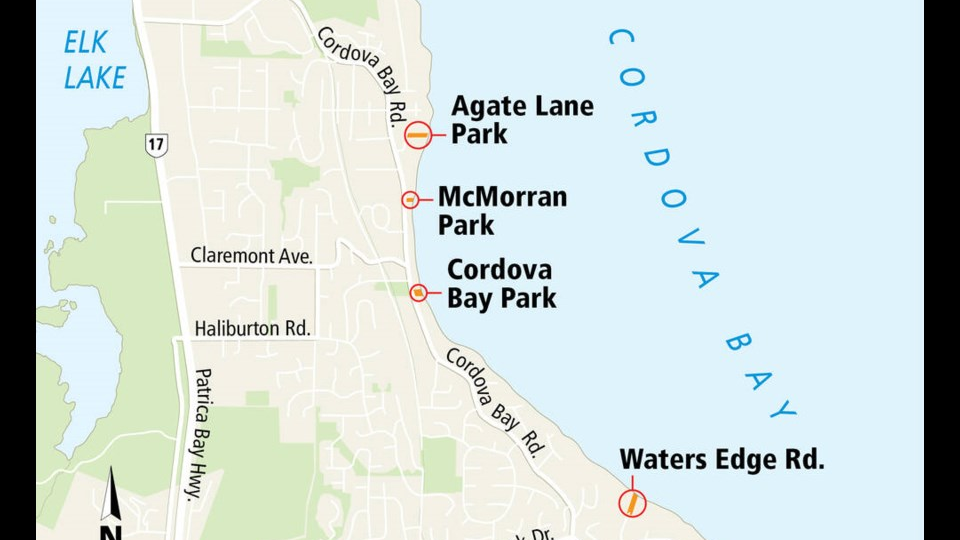
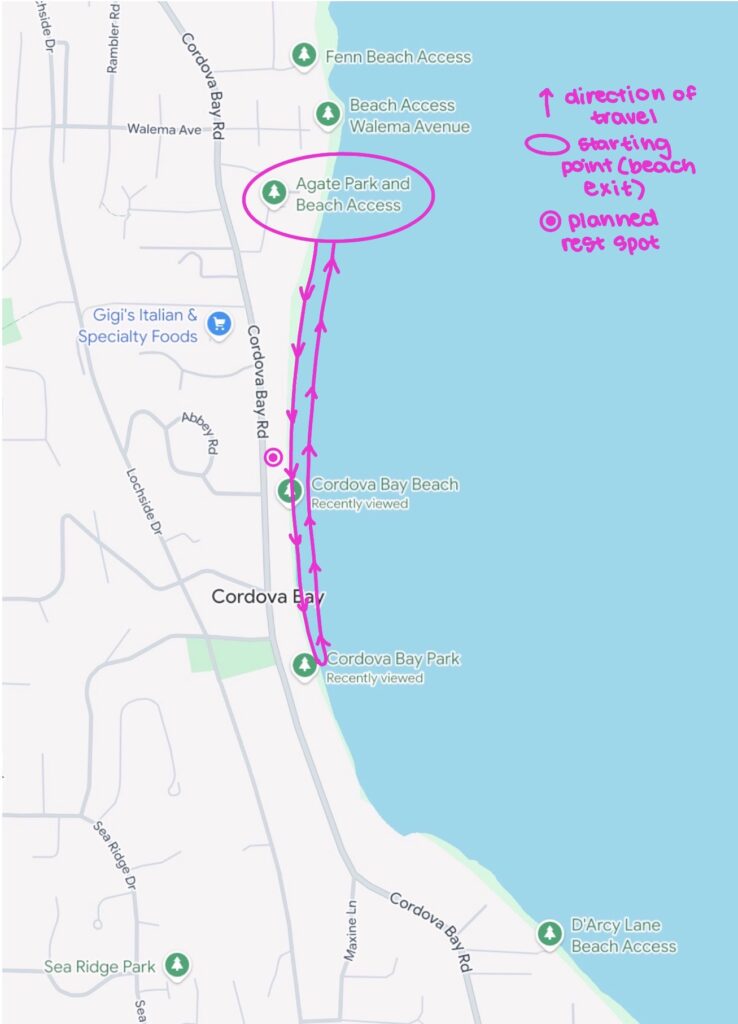
Before starting my journey, I thought about what materials I might need in order to be successful. This included coming up with a brief plan of the route I wanted to take in order to arrive successfully too, in order to enjoy my outing and remain present in the moment. Before I left, I mentally planned which beach exit I was going to use, as each one offers a vastly different view and scene.
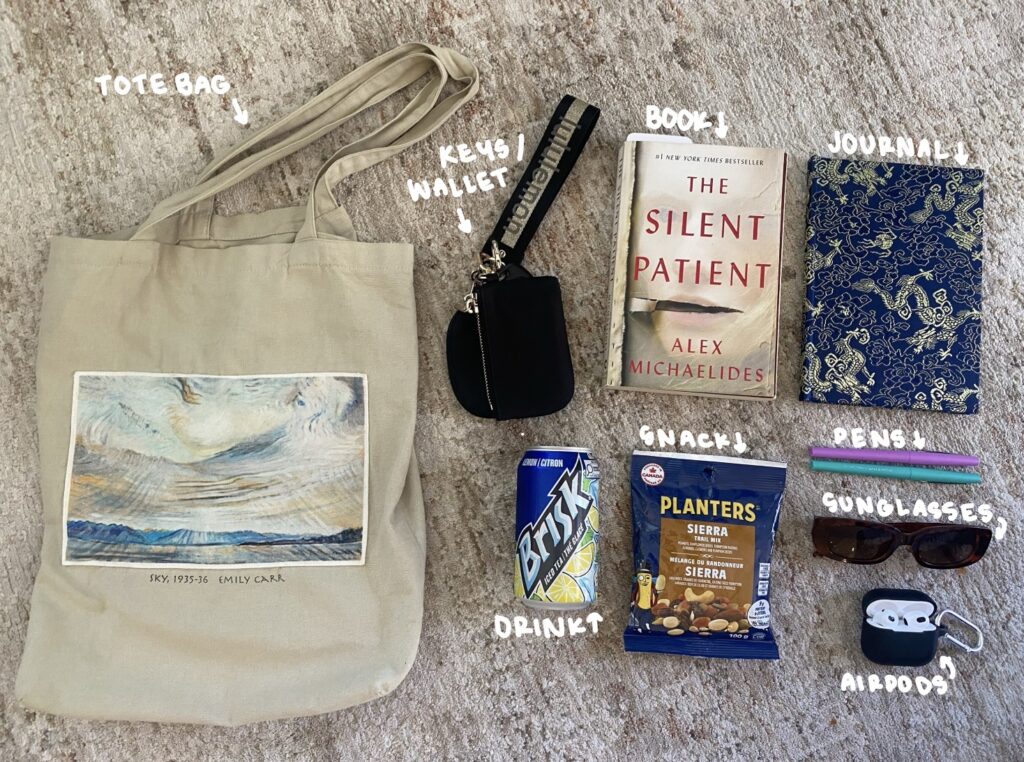
Additionally, even though I didn’t need to bring many items, I wanted to bring a few things to stay prepared and fully take advantage of the beautiful environment. Some activities that I like to do are reading and journaling, so I made sure to bring my book and journal so I could do these activities while visiting!
After checking my weather app, I saw that the temperature was 24 degrees celsius! I made sure to wear sunscreen (not included in photo, but I also brought it along with me) to ensure I didn’t get sunburnt. Once I had my stuff and plan, I was ready to set off and enjoy my afternoon outside!
Starting the Journey
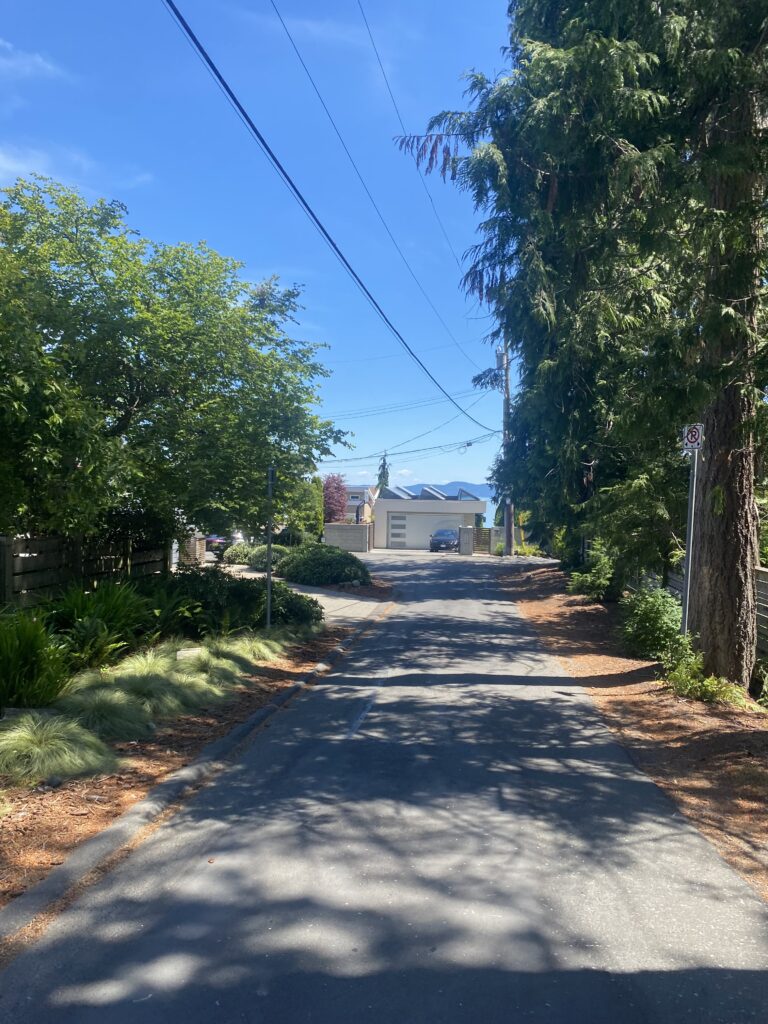
At around 1:00pm, I decided to drive to the Agate Beach access, located on Cordova Bay beach. It’s about a 5 minute drive from my house, which is super close. After setting off, I was really looking forward to spending time in the sun. I queued a few songs to listen to on the way there, setting the mood for my adventure!
One challenge I encountered was that there was no parking in the parking lot. This prompted me to extend my walk down to the ocean, ultimately redirecting my journey of getting to the beach.
I ended up parking just down the street. The views of the water and birds chirping was unmatched!
Below is a quick video of my walk from where I parked to where the beach access parking lot is. I was grateful for the detour, as it allowed me to continue the journey and experience the location from a different perspective. On the way down, the smell of saltwater and seaweed was prominent, reminding me of how lucky I am to live so close to the water!
Arriving at the Beach
After the short trip, I had made it! Walking through a small park, I was greeted by the sound of crashing waves and the sun blaring down on me. I was feeling calm, excited, and happy to walk the beach and spend some time reflecting and reading.
People were enjoying the views from the park. I felt a sense of community as I heard children playing and people talking in the distance.
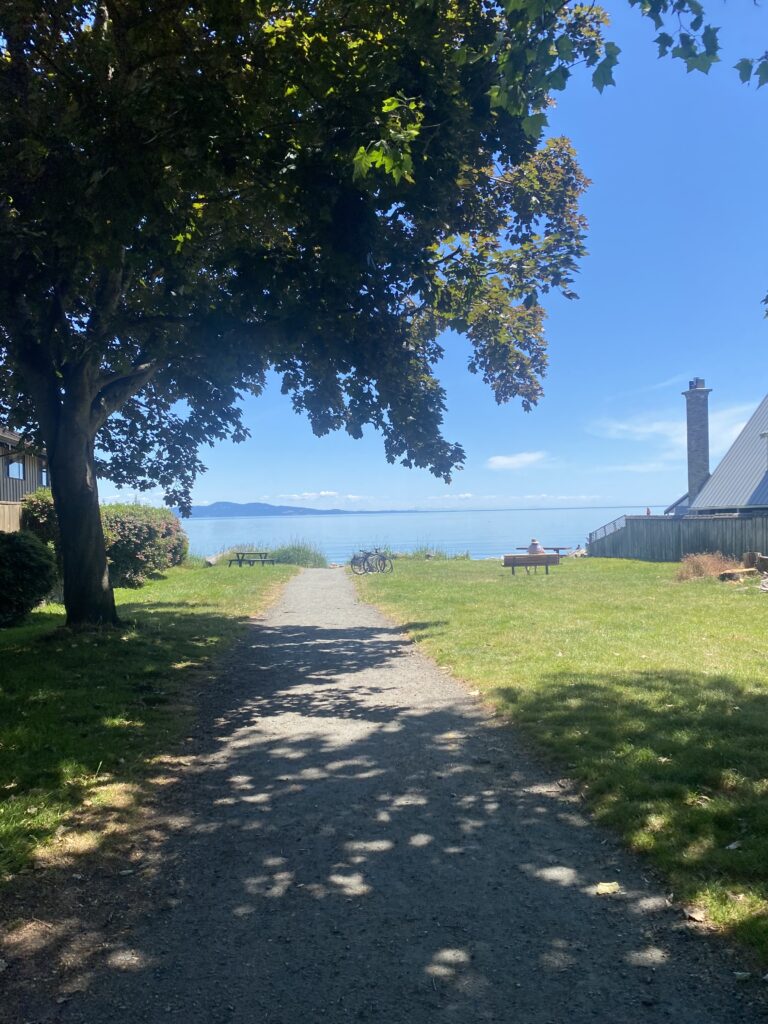
Taking in the Views
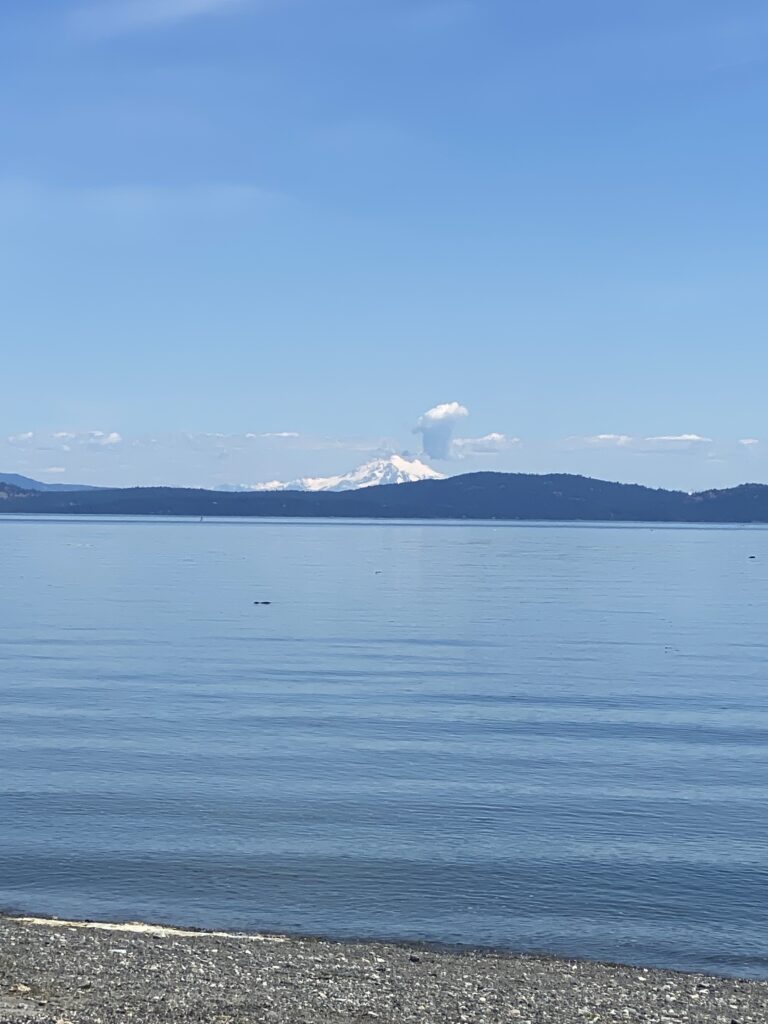
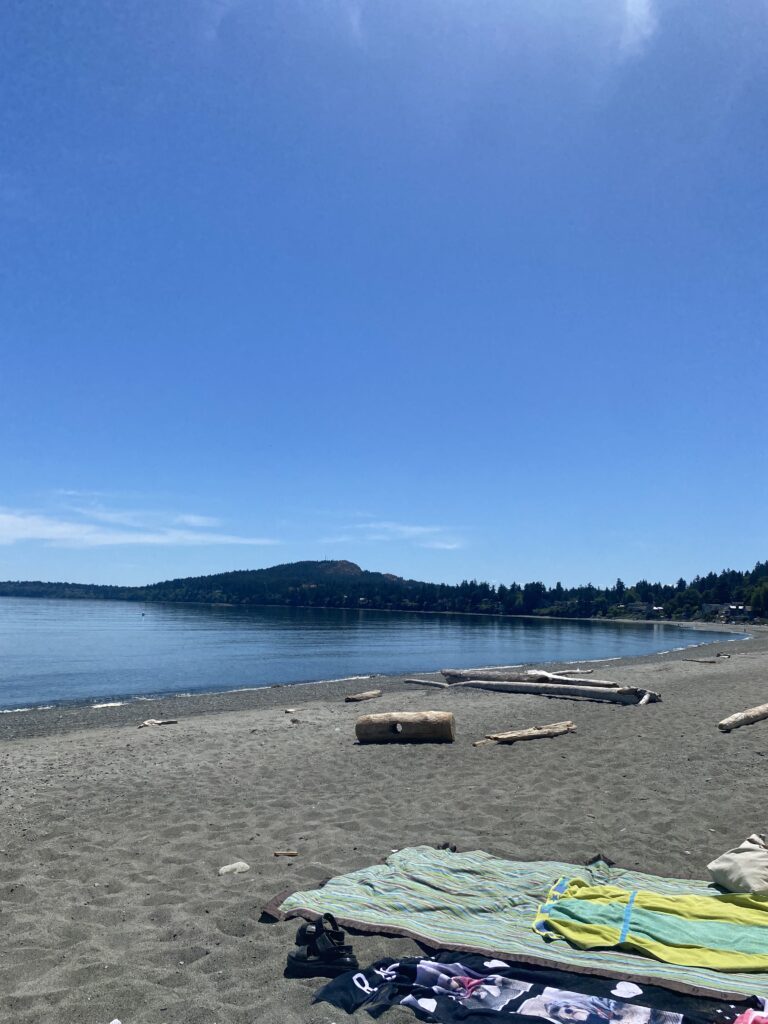
Walking onto the beach initially, I was impressed by the stunning sights, and the amount of people that were also enjoying the day!
One thing that I have always thought was really interesting is that there are multiple mountains you can see from this beach. Mount Baker, which was extremely easy to see on this particular day, is located across the border in the United States. Another mountain you can see is Mount Douglas, which is really close to the University of Victoria. I think it’s so cool that you can see both of these places, and it reminds me that scale is relative: places that seem far away are actually closer than we think.
Walking Along the Water
As I started walking further down the beach, I noticed a group of people that looked familiar. To my surprise, some of my friends were tanning and swimming!
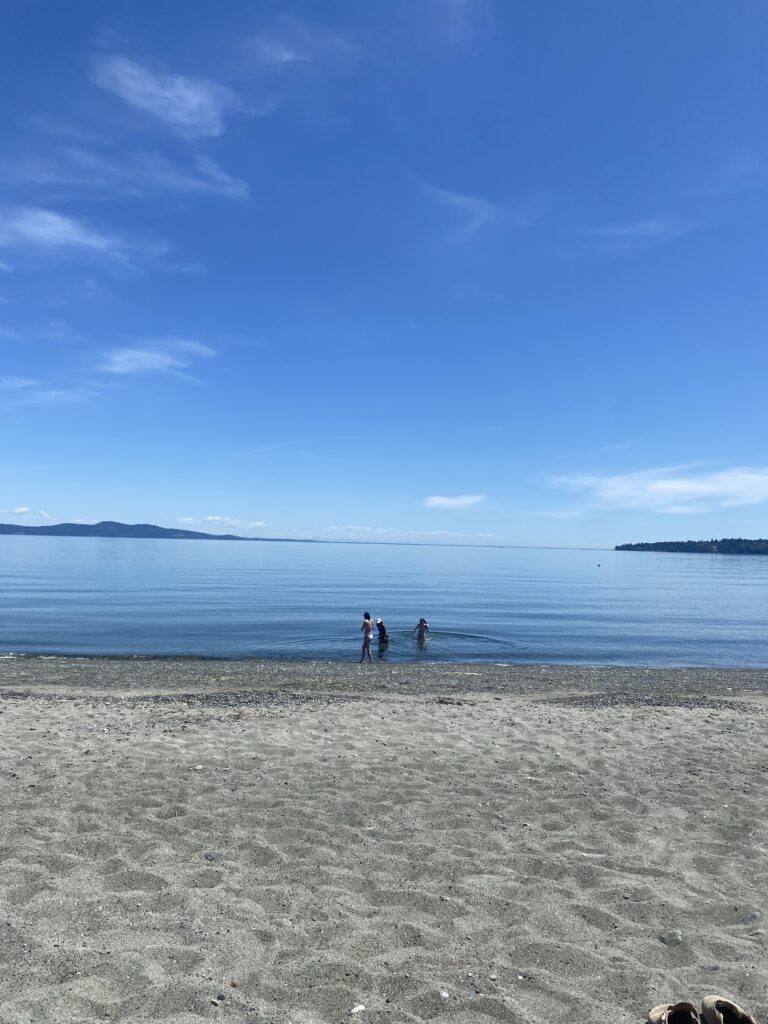
I felt really excited to run into them, and we ended up spending the rest of the afternoon together. We had lots of snacks and drinks, so it was really enjoyable! At this point, I was feeling relaxed, and part of my community. I felt motivated comparatively to when I first left, and content with how the day was going.
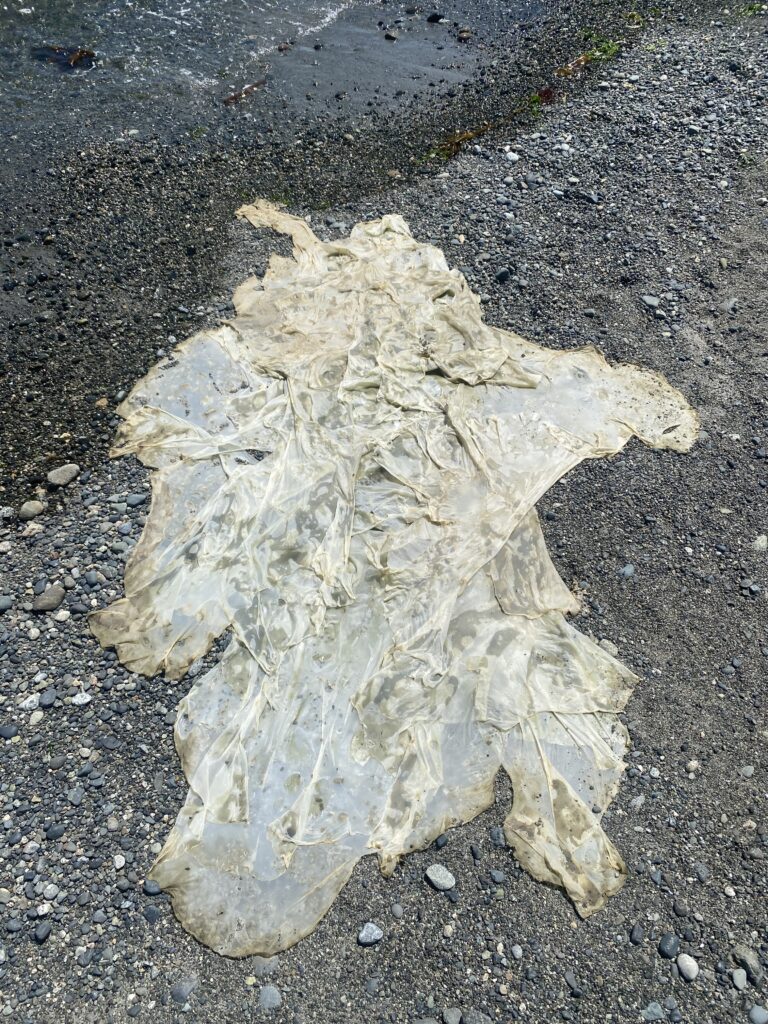
This is some seaweed I found. I wanted to include it in my story because it was a surprising discovery. It was dried out from the sun, but was almost 5 feet in length laying on the beach! I learned that the reason that it’s white is most likely because it lost pigmentation due to the fact that it’s sun-bleached. It’s original colour would have been dark red or green.
After my friends finished swimming, we sat on our blankets and towels to sit in the sun. I ended up doing some journaling, to help me clear my head and reflect. I have found that journaling helps significantly in reducing stress and anxiety, as it improves mental clarity. Writing is proven to be a healthy strategy when working through emotions, problems, and events, and I especially love to journal in outdoor settings.
The sound of crashing waves is one of my favourite things. Appreciating the little things was a key take away from my adventure! While I was taking this video, I noticed some tiny crabs in the water. Our range of diverse animals on Vancouver Island is so interesting.
Heading Back
After a long afternoon in the sun, I was ready to go home. Visiting Cordova Bay beach was the perfect way to reset. I was able to take a break from school, work, and being stuck in the same routine. While walking back to my car, I thought about the highlights of the adventure, and how I would demonstrate my experience through the photos, videos, and notes I had taken from my journey. I wanted to encapsulate the feelings of enjoyment I had experienced accurately.
Reflection and Peer Feedback
On my adventure to the beach, I was extremely grounded. The vastness of the ocean reminded me to put my everyday problems into perspective. I felt appreciation for the little things and realized that sometimes the best experiences are the most simple ones. Unexpected events (like seeing my friends) made for a spontaneous plot twist in my mundane plans to visit the ocean. One challenge I encountered was figuring out what kinds of photos and videos I wanted to include in my story. I tried to incorporate a variety of content to give viewers a more authentic perspective of my journey.
Reflecting on my multimedia story creation process, I learned that the correct usage of video, photos, and text really does have an impact on learners/readers. How others perceive your documented experiences directly correlates with how well individuals process information. A mix of media formats boosts retention and comprehension, promoting just how important the concepts within the course are. Prior to taking this class, I didn’t realize how impactful it was to utilize multimedia principles to increase organization and presentation. In future, I think this will be helpful when presenting knowledge to other learners!
Some peer feedback I received was to incorporate image captions and text separators. Providing captions gives learners an accessible option for determining what is being presented in photos, and improves retention. I made sure to provide captions for most of the photos, but for specific ones I wanted to make sure interpretation was open ended, as the image may have been fairly self explanatory. I included some separators after trying to figure out how to visually divide the “chapters” of my story!
Applying Mayer’s Principles of Multimedia Learning
While creating this story, I incorporated numerous Principles of Multimedia Learning into my documentation.
Coherence: I chose to limit how much text I incorporated to reduce busyness and distractions from the main points. I also cut out a significant of content (photos and videos) from my adventure. Choosing the most important and representative pieces was crucial in limiting visual clutter.
Signaling: In my story, I used the signalling principle to highlight certain parts of the material and maintain organization. I used arrows in my “supplies” photo to demonstrate direction and relationships between the labels of the supplies and the actual supplies. I also used signalling by utilizing headings within my story. This gives viewers insight into what kind of content they will be reading and looking at. I also utilized the signaling principle on my map and key. The key allows you to interpret and organize information accordingly, by visually connecting the symbols on the map.
Contiguity: Throughout my story, I purposely made sure to place images and videos close to the associated text. This makes it easy for readers to understand what the author (myself) is trying to communicate, reducing risk of confusion. I also used the contiguity principle in my photo of the supplies I brought with me. I intentionally placed labels nearby the objects to ensure cohesiveness.
Pretraining: After seeing one of my peers incorporate a map into their multimedia story, I thought this was a brilliant idea. Since it was difficult for me to explain how there are numerous beach exits along the water, it only made sense to show this via an image. I decided to set this photo alongside the introduction and title to provide readers with an idea of where I was going (the location) before diving into the story. They could mentally form an image of what my journey might look like, and what kind of activities I might take part in based on reading and viewing these media formats before the story started.
Modality: Although discreet, I presented the concept of modality aurally through a video. I wanted to demonstrate the sounds I was hearing, as well as the sights. The video included the vivid soundscapes of the ocean waves alongside the physical video of the waves crashing on the shore. This is important because it maximizes human cognitive abilities by using two separate sensory channels (auditory and visual).